
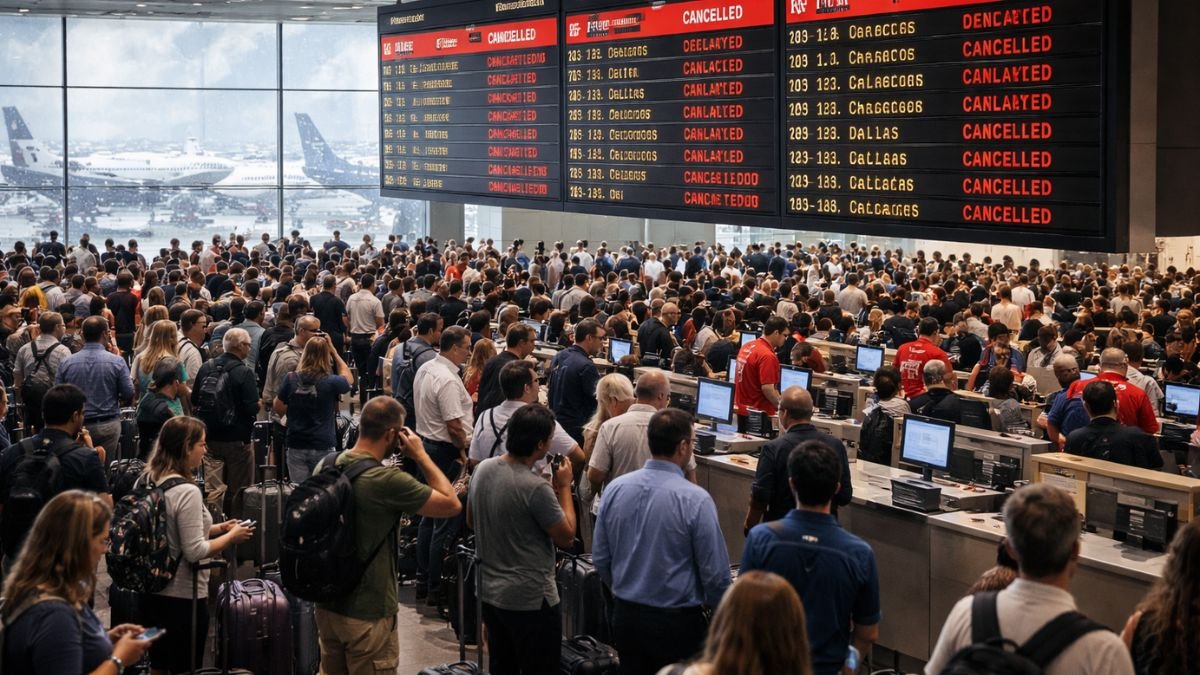
Air travel across the United States faced significant disruption, leaving thousands of passengers stranded as widespread delays and cancellations hit major airports and airlines.
According to the latest updates, the aviation network recorded 1,910 flight delays and 135 cancellations, affecting some of the busiest travel hubs in the country.

Leading carriers such as Delta Air Lines, American Airlines, United Airlines, Spirit Airlines, and JetBlue were among the most impacted.
Most Affected Airports in the U.S.
Several major airports experienced operational strain, with both delays and cancellations disrupting schedules.
Key impacted airports include:
- Hartsfield-Jackson Atlanta International Airport
- 34 cancellations and 115 delays (highest cancellations)
- Dallas/Fort Worth International Airport
- 5 cancellations and 154 delays (highest delays)
- O’Hare International Airport
- 7 cancellations and 143 delays
- Orlando International Airport
- 9 cancellations and 101 delays
- Los Angeles International Airport
- 11 cancellations and 95 delays
- John F. Kennedy International Airport
- 8 cancellations and 66 delays
- George Bush Intercontinental Airport
- 12 cancellations and 67 delays
- Detroit Metropolitan Wayne County Airport
- 11 cancellations and 47 delays
- Boston Logan International Airport
- 8 cancellations and 46 delays
These disruptions highlight widespread congestion across both East Coast and West Coast aviation hubs.
Airlines Facing the Biggest Disruptions

Airlines across the board reported operational issues, with some experiencing more severe disruptions than others.
Most affected airlines:
- United Airlines
- 39 cancellations and 158 delays
- Spirit Airlines
- 34 cancellations and 94 delays
- Delta Air Lines
- 33 cancellations and 117 delays
- American Airlines
- 2 cancellations but a massive 296 delays
- JetBlue
- 5 cancellations and 86 delays
- Frontier Airlines, Alaska Airlines, and Republic Airways also reported smaller-scale disruptions.
While some airlines had higher cancellation numbers, others—like American Airlines—faced widespread delays affecting schedules nationwide.
Why Are Flights Being Disrupted?
The disruptions appear to be concentrated around major hub airports, where high traffic volumes can quickly lead to cascading delays. When one flight is delayed, it can impact multiple connecting routes, causing widespread scheduling issues.

Key contributing factors may include:
- High passenger demand at major hubs
- Operational bottlenecks
- Air traffic congestion
- Weather-related disruptions (in some regions)
The ripple effect across interconnected routes has intensified the situation, impacting both domestic and connecting international flights.
What Affected Passengers Should Do
If your travel plans are affected, here are some important steps to take:
- Check real-time flight updates via airline apps or airport websites
- Contact your airline for rebooking or compensation options
- Arrive early at the airport to manage uncertainty
- Keep alternative travel plans ready
- Monitor weather and air traffic updates
- Save boarding passes and receipts for claims
Being proactive can help minimize inconvenience and improve your chances of securing alternative travel arrangements.
Overall Impact on U.S. Aviation
The scale of disruption—nearly 2,000 delays and over 100 cancellations—highlights the strain on the U.S. aviation system.
Major cities like Atlanta, Chicago, Dallas, Los Angeles, and New York were particularly affected, demonstrating how issues at key hubs can impact the entire network.
Airports such as Atlanta led in cancellations, while Dallas and Chicago recorded the highest delays, showing different operational challenges across regions.
Conclusion
The recent wave of flight disruptions across the United States underscores the complexity of modern air travel. With thousands of passengers affected, the situation highlights the importance of planning ahead and staying informed.
As airlines work to stabilize operations, travelers should remain flexible and prepared for changes. While disruptions are often unavoidable, being informed and proactive can help reduce travel stress.